


Before and after Eden: Virtual Exhibition
This browser cannot display the 3D room. All 12 works in the exhibition are listed below.
Before and after Eden
Art by Simcha, Five Towns, New YorkFrom 25 November 2026
Back to the exhibition pageWorks in the room
Moving around
- LookDrag with the mouse, or swipe sideways.
- View a workClick or tap a painting or its label. Enter opens the painting in front of you.
- WalkClick the floor, hold the arrow buttons, or use W A S D and the arrow keys.
- TourPlay starts the guided tour, K pauses it. P and N step through the works.
- ShareThe share button links to the painting you are viewing.
- Full screenF. Esc closes panels.
Before and after Eden
Preparing the room…
All works in this exhibition (12)
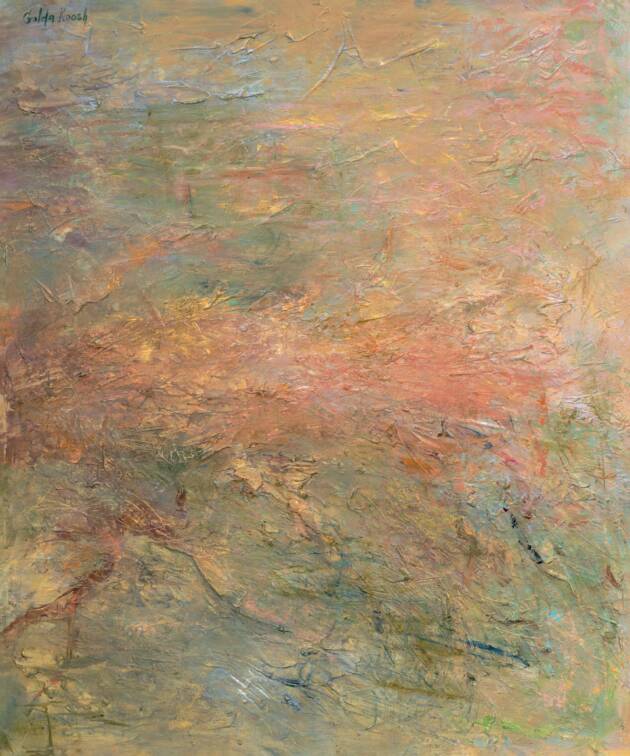
The boundary of the Garden
100×120 cm – 39×47 in
Everyone is interested in Adam’s fate. I am interested in the fate of Eden as a perfect creation. The garden remains, but it is no longer whole. Within it, a boundary appears between light and density, between stillness and movement. And it is here that the journey begins.
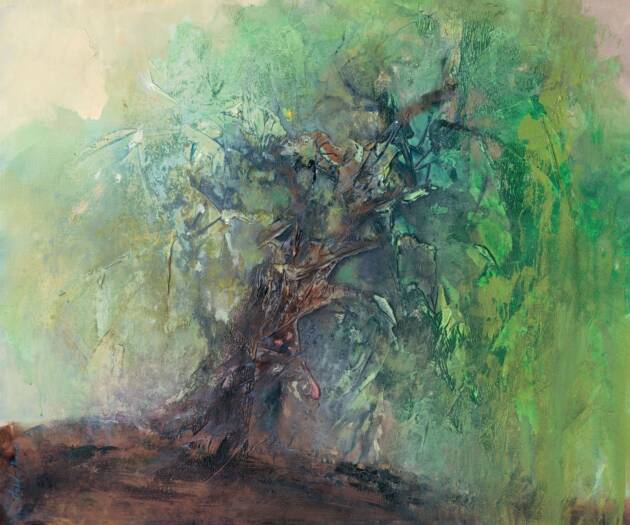
At the edge of Eden
100×120 cm – 39×47 in
Eden is still here, still filled with light, yet the boundary between innocence and knowledge is already beginning to emerge.
The Tree appears as a living, shifting structure, at once alluring and unsettling.
Within it, the figures of Adam and Eve are barely discernible, still belonging to the garden, yet already standing on the threshold of separation.
The work does not directly depict the story of exile. Instead, it captures the moment before it, the instant when choice first appears, bringing with it fear, desire, and the possibility of loss.
Light is no longer an absolute protection. Eden begins to turn into a memory of absolute harmony.
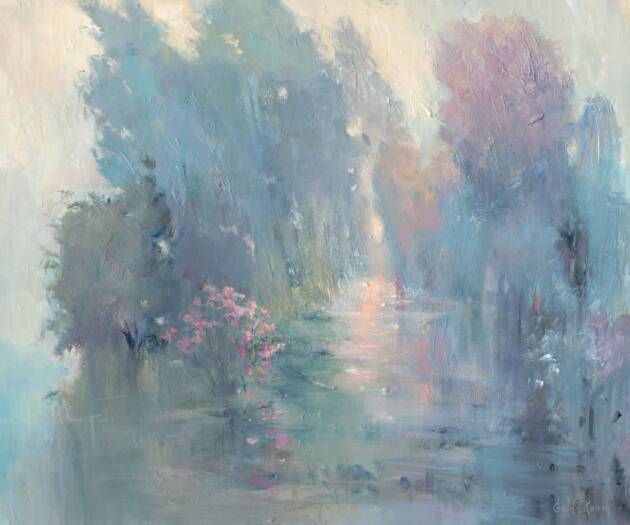
Breath of the Garden
100×120 cm – 39×47 in
In this garden, there is no event and no story. Light, water, air, and blossom exist as a single breath, a state in which no separation has yet emerged between humanity and the world. It is an elusive presence of life, dissolved into light and the reflections upon the water. Deep within the garden, faint human figures can barely be discerned. They do not become the protagonists of the painting, nor do they separate themselves from the surrounding space. Their presence dissolves into the air of the garden, where the human being still remains part of a single living world. This work speaks of harmony before separation, of a moment when everything is still connected through the shared breath of light, water, and earth.
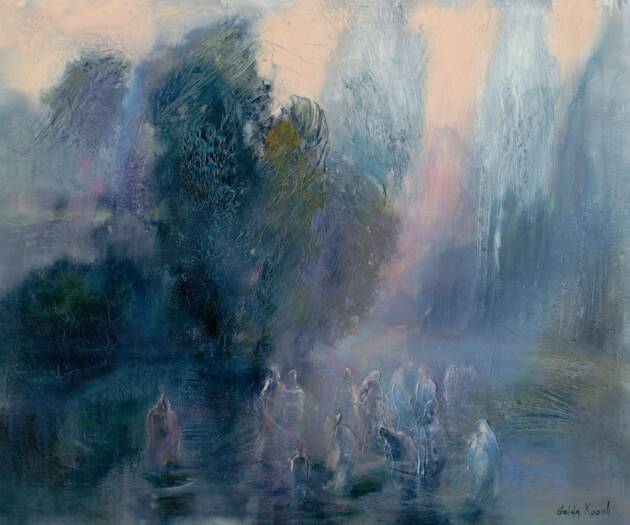
In Search of the Lost Light
100×120 cm – 39×47 in
This work is about people continuing to search for light after its loss. The figures move through water and mist, connected by invisible threads of memory, fear, and hope. They still remember the complete harmony of Eden, yet can no longer return to it. The garden remains, a memory of light still sensed behind the density of air and water. The work also evokes an association with tashlich: the movement toward the water becomes an attempt to release the weight of the past and find a path toward purification once again. It is a state of humanity after the loss of Eden. The way forward is still unclear, yet the memory of light continues to guide them through the mist.
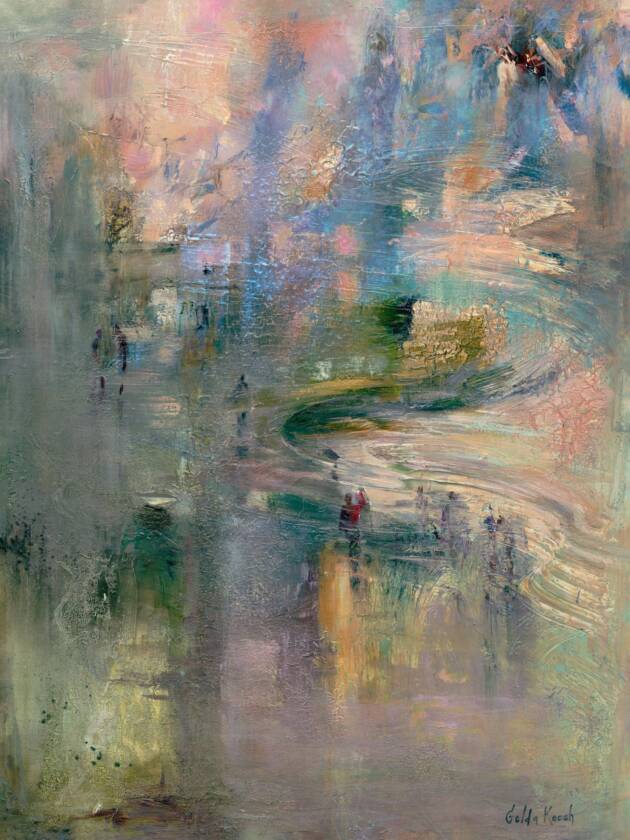
Pardes. Unseen
120×90 cm – 47×35 in
The garden has not vanished. It has slipped beyond our sight. Once, there was Eden, a realm without choice, where harmony and joy were inherent. Now, there is only motion. The ground offers no guidance; the gaze no longer recognizes. We move without origin, without destination.
Four rivers once shaped and oriented the world. Now their waters carry no direction, only the quiet certainty that return is no longer possible.
Eden is not found again. And so we wander through the mist, learning to navigate by touch alone.
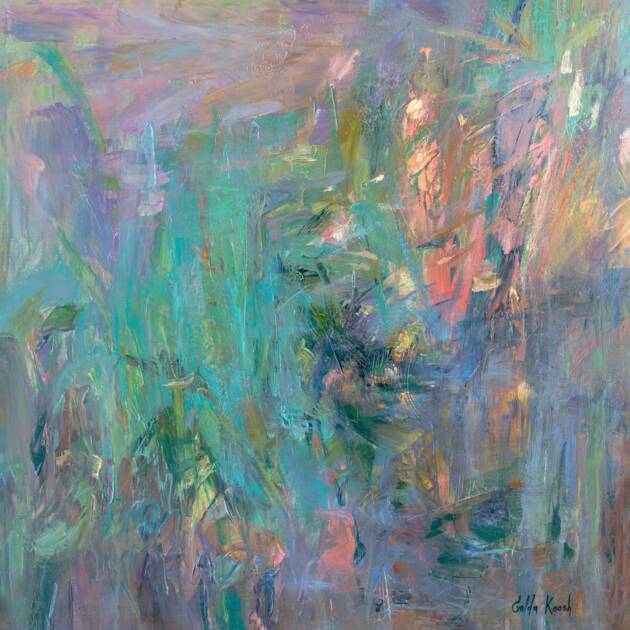
Along the River Prat
100×100 cm – 39×39 in
The expulsion from Eden marks a turning point—an irreversible shift in the human story. Harmony dissolves, and in its place emerges a world shaped by rupture and loss. Yet within this fracture lies a beginning: a life without a prescribed path.
Choice enters. And with it, responsibility—for oneself, and for what follows.
Of the four rivers, only one is illuminated. Its waters carry the past away, offering no return. Beyond the cradle, the first steps are taken—uncertain, necessary, and wholly one’s own.
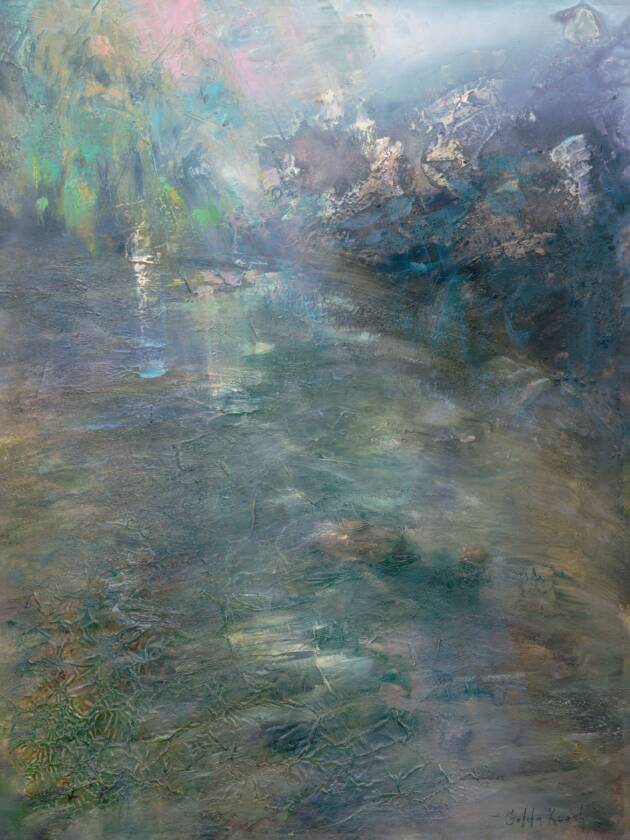
Memory of Water
120×90 cm – 47×35 in
This work is connected to Eden, a state of unity between water, light, air, and living presence. The river remembers. Water holds traces of a world that had not yet been divided: light before language, movement without fear, silence in which the human being was still part of nature rather than separated from it. The surface constantly oscillates between reflection and disappearance, as if the image itself dissolves within memory. This is the memory of a world before separation became final.
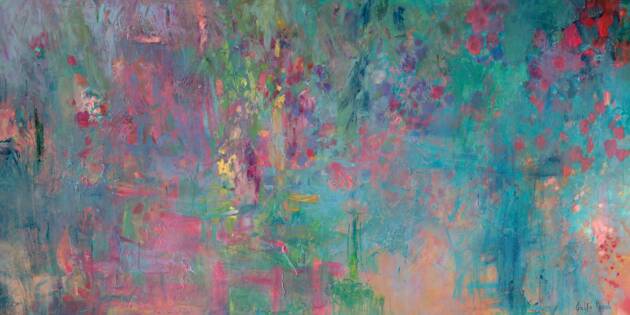
The Elusive Garden
90×180 cm – 35×71 in
It is impossible not to lose Eden. First, the boundaries disappear. Then the outlines. Light merges with air, air with flowers, and the flowers become a memory. We try to hold on to perfection, but it does not belong to us. The tighter we cling to it, the faster it slips away. Eden remains a memory, a longing for a lost unity.
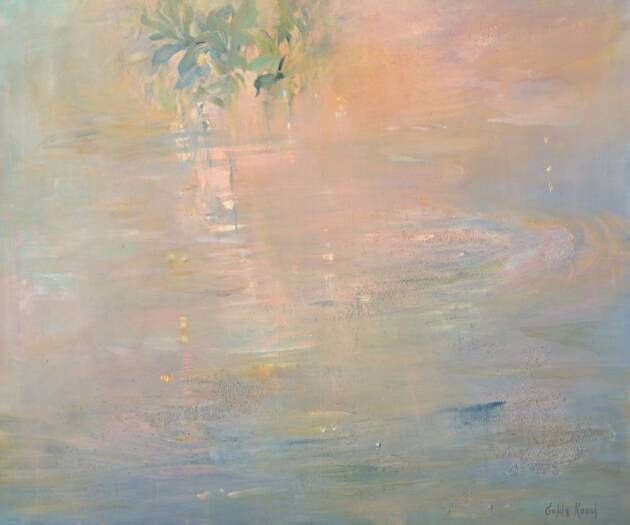
The Dissolving Garden
100×120 cm – 39×47 in
You can forget the way home, to peace and lightness. You can stop recognizing its contours. You can search for it in distant lands, in other people’s words, in new places.
But its image never dissolves from memory.
With time, details disappear. Boundaries fade, water blends reflections with the sky, yet light, silence, and the memory of the world’s wholeness remain.
Eden does not disappear. It becomes invisible.
And one day you realize that what you were searching for outside yourself had been living within you all along.
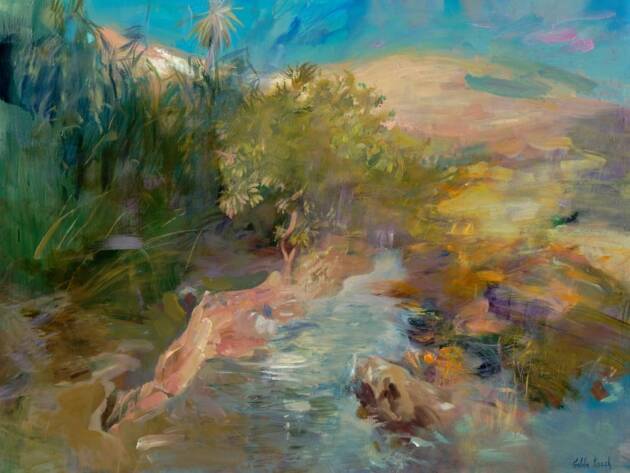
The First Garden. Promise
90×120 cm – 35×47 in
This is the very first garden, a world before the appearance of humanity, before history and choice. Yet at the same time, it is the Land of Israel, where we already stand. We are within that same garden, witnessing its radiance, both as a reflection of the primordial Eden and as the promise of the Promised Land. Light and its reflection connect the beginning with the future. Paradise here is neither lost nor something awaiting us ahead: it continues to exist within the Land itself, as the possibility of life, hope, and a return to wholeness.
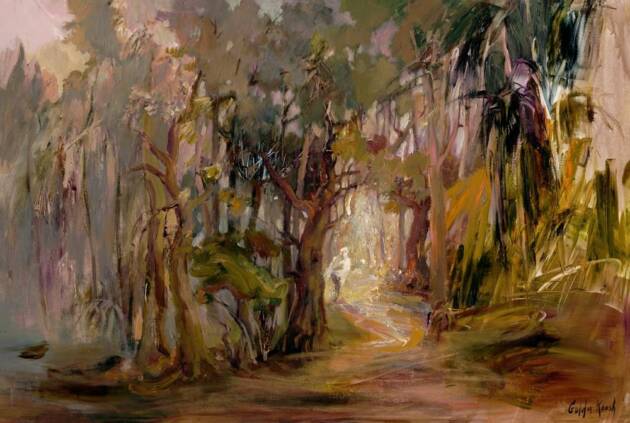
The Choice of the Way
100×150 cm – 39×59 in
After leaving the Garden, humanity did not lose only a place. It lost a way of seeing the world. The path back is never obvious. It begins with a choice: to remain where everything is familiar, or to step into the unknown, trusting that light exists beyond what we can already see. You never know where the road will lead. You simply choose to walk. Perhaps Paradise is not a place behind us, but a direction toward which we move. The choice is always ours.
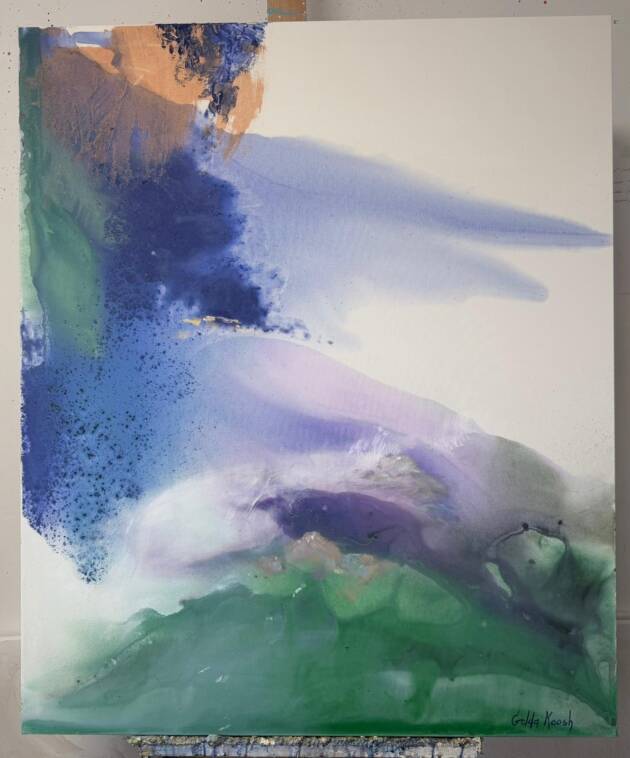
If there is a Path to Eden
120×100 cm – 47×39 in
Is there a way back to Eden? The path is not given. There is only movement toward an Elusive light. The garden is lost as a place. And if a path exists, it will be revealed from above.