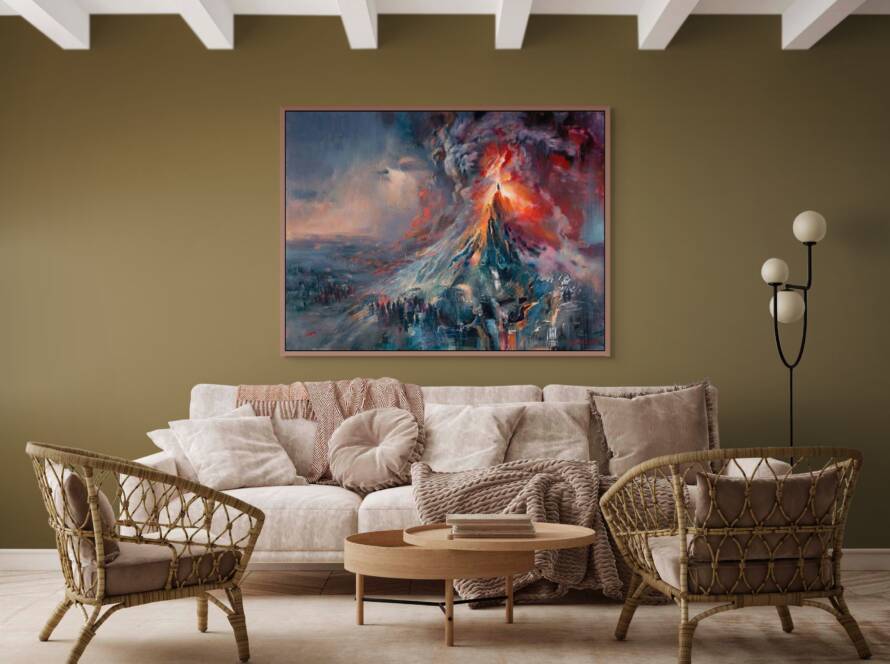
The synagogue has always been more than a building. It is where community gathers, where prayers rise, and where generations connect to something greater than themselves. For Golda Koosh, painting the synagogue is an act of devotion — a way to preserve the beauty, warmth, and spiritual intensity of these sacred spaces on canvas.
Her synagogue paintings are among the most breathtaking works in her Judaica collection. Each one invites the viewer inside — past the stone walls and arched doorways — into a world of light, color, and prayer. Here, we explore four remarkable works that capture the essence of the Beit Knesset through Golda Koosh’s vibrant artistic vision.
The Quiet Synagogue: Stillness Before the Divine
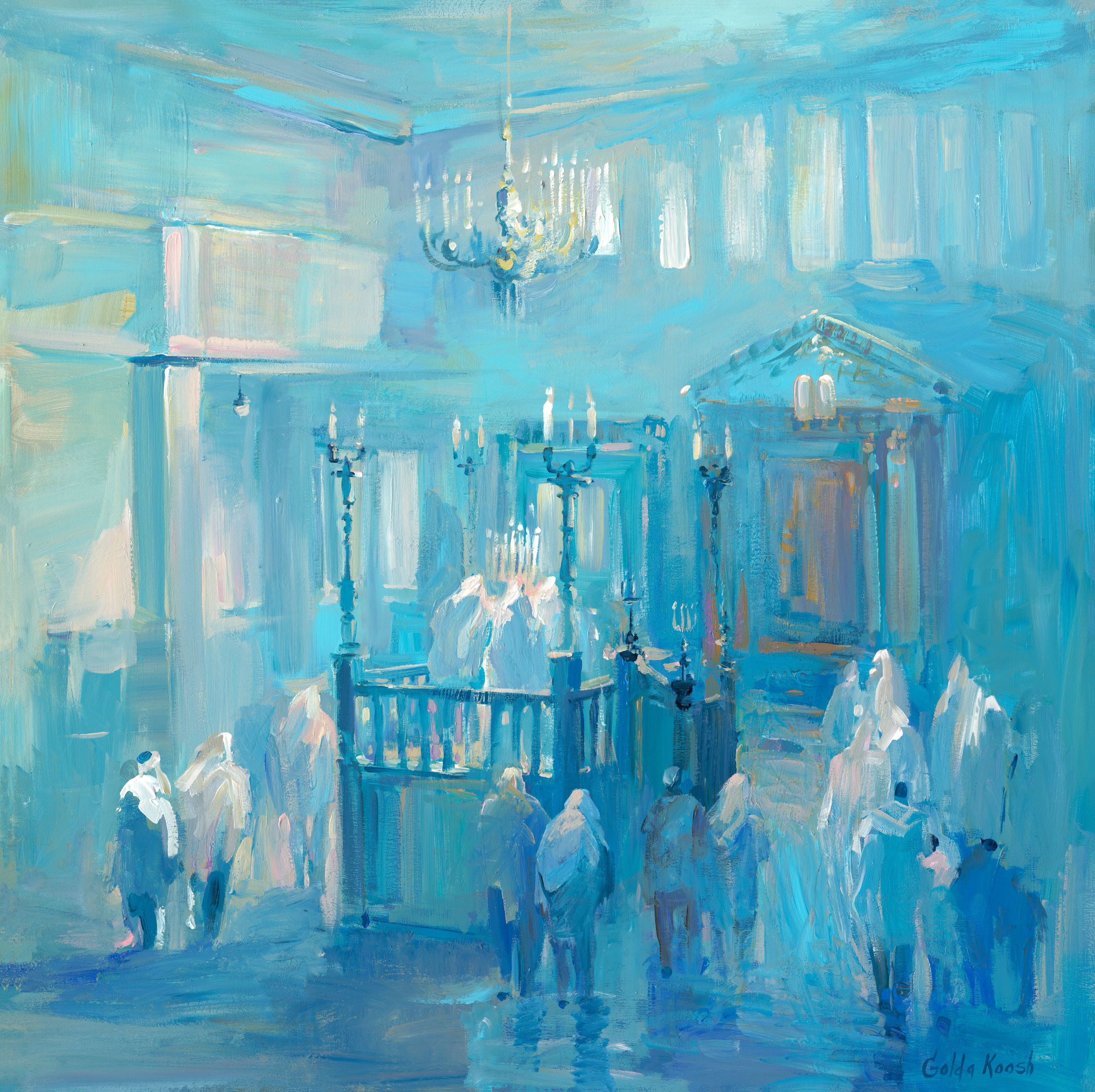
Some of the most powerful moments in a synagogue happen in silence. The Quiet Synagogue captures exactly that — the hushed reverence of an empty sanctuary, where the presence of the Divine feels almost tangible. Golda Koosh renders the space with soft, luminous tones that suggest both age and timelessness. The viewer can almost hear the echo of prayers that have been spoken within these walls for centuries.
This painting speaks to anyone who has ever entered a synagogue outside of services and felt that peculiar stillness — a silence that is not empty, but full. It is a meditation on sacred architecture and the way physical spaces absorb the spiritual energy of those who use them.
Bathed in Techelet: Heaven’s Color on Earth
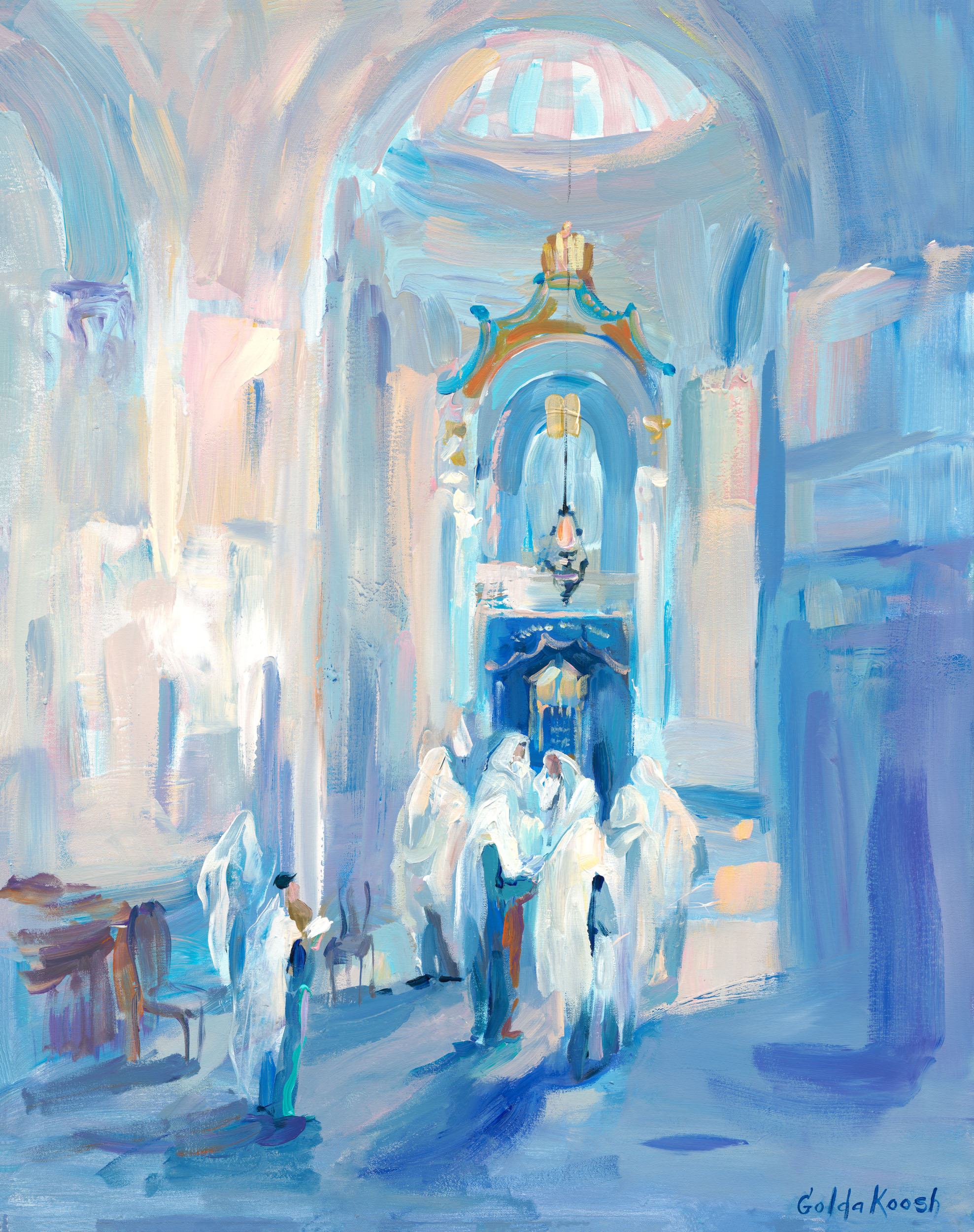
Techelet — the sacred blue dye mentioned in the Torah — symbolizes the connection between heaven and earth. In Bathed in Techelet, Golda Koosh drenches an entire synagogue interior in rich shades of blue, creating a space that feels suspended between the physical and the spiritual. The color wraps around columns, arches, and pews like a prayer shawl, transforming the architecture into something almost otherworldly.
The use of techelet is deeply intentional. In Jewish tradition, this blue is said to resemble the sea, which reflects the sky, which reflects the Throne of Glory. Golda Koosh translates this chain of meaning into paint, inviting the viewer to look at a synagogue and see not just a room, but a gateway to the heavens.
Divine Serenity: The Congregation at Kol Nidrei

If there is one moment in the Jewish year when the synagogue reaches its most solemn beauty, it is Kol Nidrei — the opening prayer of Yom Kippur. Golda Koosh captures this sacred moment in a composition dominated by blue and white, the colors of purity, humility, and renewal. The congregation stands together, wrapped in tallitot, united in a single act of collective repentance and hope.
What makes this painting remarkable is its emotional restraint. There is no drama here — only quiet intensity. The figures are absorbed in prayer, each one lost in their own conversation with God, yet bound together by the shared weight of the moment. It is one of the most spiritually moving works in Golda Koosh’s entire collection.
Lace and Light: Craftsmanship Meets the Sacred
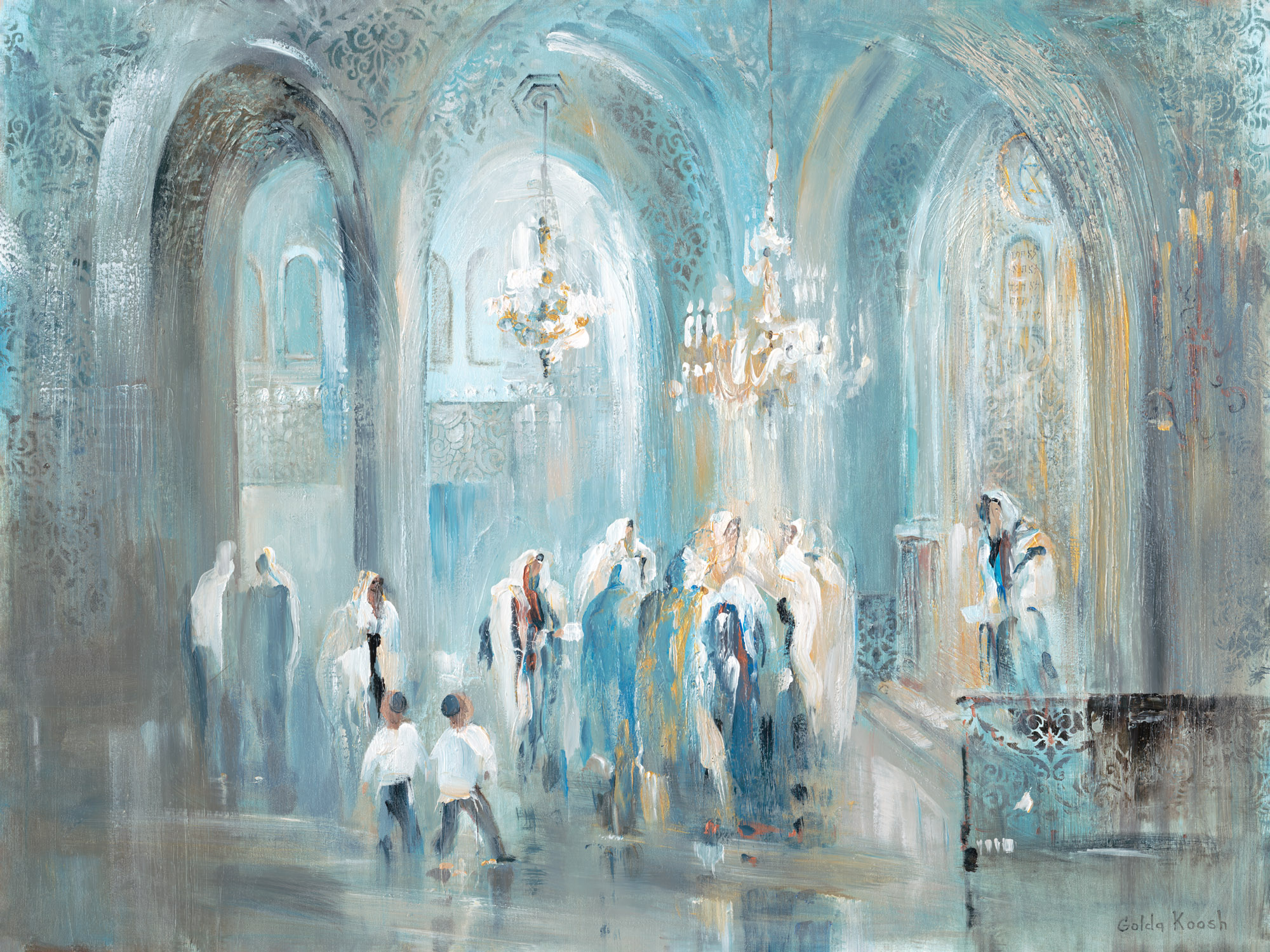
In Lace and Light, Golda Koosh turns her attention to the intricate beauty of synagogue architecture and ornament. Soft blue and gold walls are adorned with delicate patterns, while Torah crowns gleam with gold, reflecting the craftsmanship and divine artistry that has always defined the Jewish house of worship. The ornate detail creates a sense of peace and deep connection to Hashem.
This painting celebrates the idea that beauty itself is a form of worship. In Jewish tradition, hiddur mitzvah — the beautification of a commandment — is a spiritual value. Golda Koosh embodies this principle in every brushstroke, showing how the physical beauty of a synagogue can elevate the soul of those who enter it.
Why Synagogue Art Matters
Golda Koosh’s synagogue paintings are more than decorative works — they are acts of cultural preservation. As Jewish communities around the world evolve, these paintings capture the timeless essence of the Beit Knesset: the light filtering through stained glass, the warmth of gathered community, the quiet power of collective prayer.
Whether displayed in a Jewish home, a synagogue lobby, or a collector’s gallery, these works carry the spiritual weight of centuries. They remind us that sacred spaces are not just built with stone and wood, but with devotion, memory, and the accumulated prayers of generations.
Explore Golda Koosh’s full collection of original Judaica paintings at goldakoosh.com and bring the beauty of the synagogue into your home.
To ask about any of these synagogue paintings, contact the studio and mention which work you are considering.