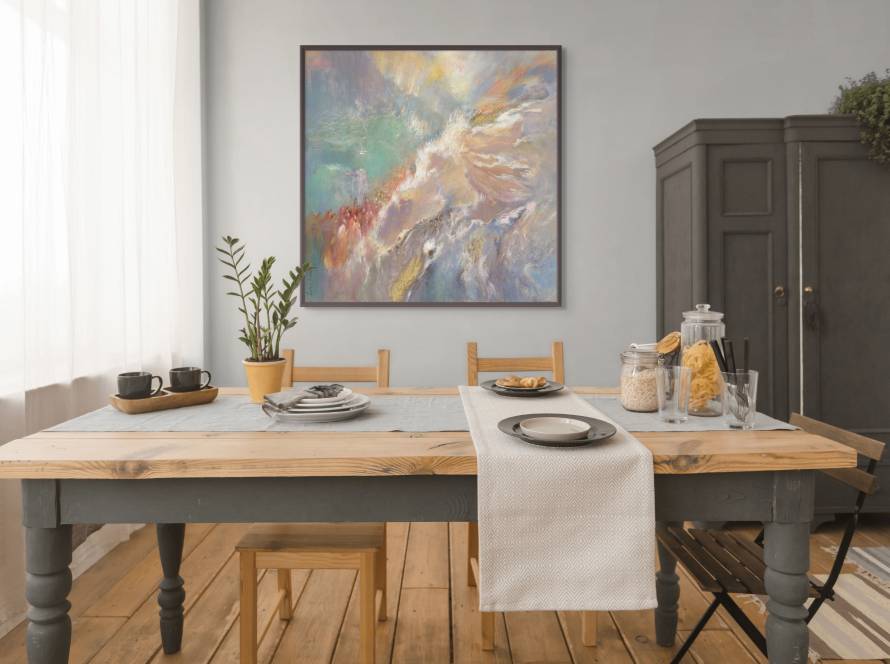
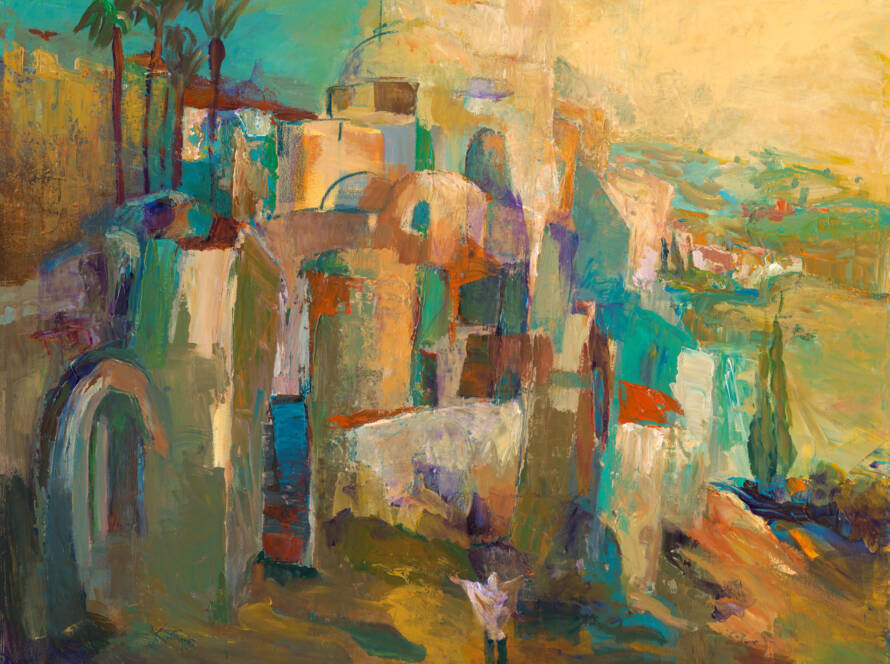
Looking for a Kotel painting? Golda Koosh paints the Western Wall in vibrant original Judaica art, handpainted in Jerusalem. Browse Kotel wall art in the collection, ask about a commission or contact the studio.
What makes a simple stone wall a spiritual heartbeat for millions? The Western Wall is more than just ancient limestone. It holds the soul of Jewish faith through prayers, tears, and celebrations over centuries.
Walking into the Western Wall plaza from Jerusalem’s quiet streets changes everything. A river of voices fills the air with prayer. Faces from all over the world come together in devotion. You feel connected to something eternal.
Every Judaica kotel painting tries to capture this moment. Artists who create authentic Jewish art see the Wall as a place where stories are written in hearts, not stone. Through Jerusalem Kotel wall art, these moments are brought into homes worldwide, sharing the essence of this sacred place.
Key Takeaways
- The Western Wall is Judaism’s most sacred prayer site, attracting millions each year.
- Authentic Jewish art captures the spiritual energy and collective devotion at the Kotel.
- Jerusalem Kotel wall art turns personal prayer experiences into visual stories.
- Sacred space art connects diaspora communities to their spiritual heritage.
- Judaica kotel painting preserves the living tradition of communal worship.
- Contemporary artists blend ancient reverence with modern artistic expression.
The Sacred Significance of the Kotel in Jewish Life and Art
The Western Wall is a symbol of faith, resilience, and art in Jewish culture. For centuries, it has attracted believers from all over, each with their prayers. Spiritual Jewish art turns these prayers into stories that connect people across time.
The Western Wall as Judaism’s Holiest Prayer Site
The Kotel is the last wall of the Second Temple, destroyed in 70 CE. Millions visit each year, leaving prayers between the stones. Artists aim to show the beauty and sacredness of this place in their holiest prayer site paintings.
Historical and Spiritual Importance in Contemporary Jewish Identity
Jewish heritage artwork shows the Kotel’s role in Jewish history. It’s a place for celebrations, mourning, and more. The stones hold the memories of countless moments, which artists turn into powerful images.
The Kotel’s Role in Artistic Expression Throughout Generations
Western Wall art has changed over time, from traditional to modern styles. Each artist adds their own view while keeping the core themes of faith and hope. These works are both beautiful and meaningful, helping people connect with their heritage.
Golda Koosh’s The People of Israel at the Kotel: A Visual Journey
Golda Koosh’s masterpiece ”The People of Israel at the Kotel” is a powerful visual story of Jewish spiritual life. It turns a sacred moment into timeless art. Here, thousands of prayers come together as one voice from Jerusalem’s ancient stones.
Capturing the Living Tapestry of Devotion
The painting shows a huge crowd at the plaza, each person unique. Men in black hats stand next to soldiers, while women in colorful scarves pray. Teenagers in modern clothes join in, and children look up at the ancient wall with wonder.
Every brushstroke adds to this living tapestry. Skin tones vary from deep brown to pale ivory. The artist captures not just faces but the souls of those praying, weaving them into the fabric of Jewish devotion.
The River of Voices and Faces in Jerusalem
The painting shows Jerusalem’s quiet alleys leading to the bustling plaza. People flow like a river toward the Wall, their individual streams merging into a powerful current of faith. It shows how personal journeys become a shared experience, where strangers become family in a sacred space.
Artistic Techniques and Color Palette Choices
| Technique | Application in the Painting | Spiritual Significance |
| Layered Brushwork | Multiple transparent glazes create depth | Represents generations of prayers absorbed by stones |
| Warm Earth Tones | Jerusalem stone ochres and golden highlights | Connects viewers to the ancient limestone Wall |
| Vibrant Clothing Colors | Blues, reds, and greens in traditional garments | Celebrates diversity within Jewish unity |
| Light and Shadow | Dramatic contrasts between the sunlit plaza and shaded prayer areas | Symbolizes revelation emerging from contemplation |
Understanding Contemporary Judaica Kotel Painting
Contemporary Judaica art turns sacred traditions into visual language for today’s spiritual seekers. The artist blends reverence for ancient practices with new artistic views. Golda Koosh’s works show how personal prayers become part of a larger whole, joining the eternal stream of worship at Jerusalem’s sacred stones.
Modern Jewish wall art featuring the Western Wall explores themes that resonate across generations. The artist uses different techniques to portray this holy site:
- Abstract interpretations using bold colors and fluid forms.
- Realistic depictions showing detailed stonework and gathered worshippers.
- Mixed media approaches combining traditional Jewish symbols with contemporary elements.
- Impressionistic styles capturing light, shadow, and spiritual atmosphere.
The people of Israel at the Kotel art reveal deep truths about Jewish identity today. Each painting is a window into collective memory, showing figures from all over drawn to this single point of connection. Artists see that each person brings their own story, yet all share the same yearning for spiritual connection.
Contemporary Judaica art captures this universal gathering with careful detail. It shows varied clothing styles, different prayer postures, and diverse facial expressions. Modern Jewish wall art preserves these moments of unity, creating visual testimonies for future generations to cherish.
Unity in Diversity: The Collective Jewish Experience at the Western Wall
The Western Wall is a powerful symbol of Jewish collective identity. It attracts people from all over, creating a living tapestry of faith. Here, differences fade away, united by a common purpose.
Men, Women, Children, and Elders United in Prayer
At the Kotel, all generations come together. Young children and elderly worshippers pray as one. Men and women, dressed in various ways, stand united.
This Western Wall unity artwork shows a people united by faith, not looks.
Colors of Every Shade: Representing Global Jewish Communities
The plaza before the Wall is a colorful mosaic. Ethiopian Jews and Yemenite families pray together. Russian and Moroccan descendants, along with Americans, all face the ancient stones with hope.
One Hope, One Prayer for Peace and Life
Despite their differences, everyone shares the same hopes. Prayers for peace and healing are spoken in many languages. This shared longing strengthens their community, echoing the phrase: These are my people, This is my Israel.
The Emotional and Spiritual Impact of Kotel Jewish Art Canvas
A kotel Jewish art canvas turns any room into a place for deep thought and connection. These artworks show the moment when personal prayers meet the prayers of many. They create a visual link between personal faith and the community’s devotion.
Each stroke of paint carries the tradition’s weight, yet speaks to today’s seekers of spiritual peace.
Personal Prayer Meets Communal Devotion
Looking at the spiritual Jewish canvas art of the Western Wall starts a personal conversation with the sacred. The art captures the moment when personal prayer becomes part of the Jewish community’s consciousness. Every figure painted reflects both personal hopes and the community’s strength.
The artist balances private thoughts with public prayer in their work. The painting shows how personal prayers join the long history of prayers at this holy site.
Connecting to Jewish Heritage Through Visual Art
Heritage connection artwork reminds us of our deep roots. These paintings draw viewers into the Western Wall’s powerful presence, even from far away. They bring Jerusalem’s sacred energy into homes across America.
Each kotel Jewish art canvas shares stories of tradition, resilience, and faith. These stories are passed down from generation to generation. The artwork opens up and talks about identity, tradition, and the bond that connects Jewish communities everywhere. Through color and design, these pieces turn walls into windows to a spiritual home and eternal belonging.
Why Golda Koosh Western Wall Painting Resonates with Modern Collectors
The Golda Koosh Western Wall painting is truly special. It turns a sacred moment into beautiful art. It shows people from all over coming together at Jerusalem’s ancient stones.
Each brushstroke captures the deep bond between faith and community at the Western Wall. This bond is what makes the painting so powerful.
Modern Judaica collectors love Koosh’s work for good reasons. It shows the Kotel as a vibrant heart of Jewish life. People from all over, like Ethiopia, Eastern Europe, Yemen, and New York, are united in their faith.
Art lovers see the beauty in how Koosh weaves individual stories into a larger tale. It’s a powerful way to show the diversity and unity of Jewish people.
| Appeal Factor | Collector Value | Market Significance |
| Authentic spiritual representation | High emotional resonance | Growing demand among collectors |
| Cultural diversity depicted | Universal Jewish identity | Cross-generational appeal |
| Artistic technique mastery | Investment quality piece | Museum-grade collectible Jewish art |
Collectible Jewish art has changed a lot. It now includes modern takes on old themes. Koosh’s painting is a perfect example. It offers deep spiritual meaning and stunning artistry.
It’s perfect for collectors who want to honor their heritage and enjoy modern art. This makes it a key piece for serious Judaica collections.
Conclusion
The Western Wall has inspired artists for centuries. Today, authentic Judaica art keeps this tradition alive. Each painting of the Kotel carries history, warmth, and devotion.
These works turn canvas into windows to Jerusalem’s holiest site. They use vibrant colors and masterful composition. This way, they capture the essence of the Wall.
A Jewish wall art collection adds more than beauty to a home. It creates a sacred space where tradition meets daily life. The figures on the Wall remind us of Jewish identity.
This art preserves the essence of the Wall. It’s what draws millions to touch these stones each year. It’s a spiritual investment that connects us deeply.
Golda Koosh offers artwork that captures the Western Wall’s majesty and intimacy. Contact her at +972506689640 or visit goldakoosh.com/contacts to find paintings that touch your soul. Each piece connects your home to Jerusalem and the Jewish people’s heartbeat.
FAQ
What makes Golda Koosh’s “The People of Israel at the Kotel” painting unique among contemporary Judaica art?
Golda Koosh’s masterpiece is special because it shows the huge crowd at the Western Wall. It captures the colorful diversity of Jewish life. Men, women, kids, and elders of all colors come together.The painting turns quiet Jerusalem streets into a river of voices and faces. It shows how people become part of something bigger than themselves. This makes it a deep symbol of Jewish identity and spiritual unity.
How does the Kotel Jewish art canvas convey the spiritual atmosphere of the Western Wall?
The artwork shows the moment when people join together in spiritual energy. It’s a living tapestry of devotion at the Kotel. The colors and composition bring the feeling of being in a river of voices and faces.It shows how personal prayer meets communal devotion. This truly captures the sacred space where spiritual energy flows through both prayer and reflection.
What significance does the Western Wall hold in contemporary Jewish art and identity?
The Kotel is Judaism’s most sacred place for prayer. It connects history to today’s spiritual practice, inspiring art across generations. It’s a focal point for Jewish identity worldwide.Believers come together with one hope and prayer. They pray for the Jewish people, peace, and life. It’s a lasting source of artistic inspiration.
How does Golda Koosh’s Kotel painting represent the diversity of the Jewish people?
The painting shows visitors with diverse skin tones and colors. It’s a visual representation of global Jewish diversity. Despite their differences, they share a common purpose at this sacred site.This shows unity in diversity. It’s a powerful display of how personal identity merges with collective heritage.
Why does Jerusalem Kotel wall art resonate so strongly with modern collectors?
Contemporary Kotel paintings appeal to those who want to see Jewish spiritual life. They capture the connection between personal prayer and Jewish identity. These artworks bridge ancient tradition and modern expression.They preserve the Western Wall’s sacred atmosphere for future generations. They also let collectors bring this spiritual heritage into their homes.
Where can I purchase authentic Golda Koosh Western Wall paintings?
To buy authentic artwork that captures the Kotel’s spiritual essence, contact Golda Koosh at +972506689640 or visit goldakoosh.com/contacts to see original paintings and prints that preserve this sacred heritage.
What artistic techniques does Golda Koosh employ in “The People of Israel at the Kotel” artwork?
Golda Koosh uses vibrant colors and dynamic composition. She captures individual spiritual moments and collective experiences. Her technique turns the Kotel’s sensory experience into visual art.This art speaks to both traditional reverence and modern artistic expression. It’s a contemporary Kotel painting that resonates deeply.